
Weight loss workout in the gym
Four gym days a week split into upper and lower body, for a beginner whose goal is losing weight. A compound lift leads every session.
A real first week from Astro, FitAstra's AI coach — made by the plan engine the app uses.
Astro
Fuel rule: hold a moderate calorie deficit (~400-500 kcal) with 1.6-2g protein per kg bodyweight, so what you lose is fat, not muscle.

Built by Astro on FitAstra · Get the free app: fitastra.co/download
Lose weight · Full gym · Beginner
Your 4-week plan
- sessions / week
- 4
- sessions / week
- exercises / week
- 16
- exercises / week
- working sets, week 1
- 48
- working sets, week 1
Day 1 · Upper Body
4 exercisesWarm-up first
- Easy cardio. 5-8 minutes. A brisk walk on the treadmill, an easy bike, or skipping — long enough to break a light sweat and loosen up. You're warming up, not training yet.
- Ramp up: Barbell Incline Bench Press - Medium Grip. Two light sets of Barbell Incline Bench Press - Medium Grip — roughly half your working weight, same reps. These don't count as your sets.
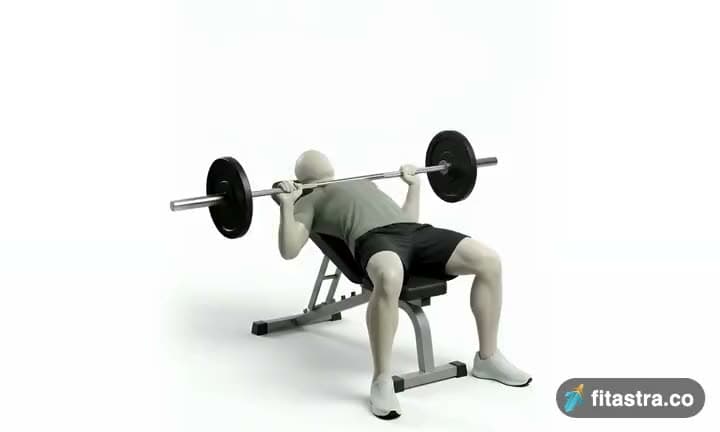 1
1Barbell Incline Bench Press - Medium Grip
3 × 10–12Rest 60sTouch the upper chest and keep your shoulder blades pinned back into the bench.
How to do it
Lie back on an incline bench. Using a medium-width grip (a grip that creates a 90-degree angle in the middle of the movement between the forearms and the upper arms), lift the bar from the rack and hold it straight over you with your arms locked. This will be your starting position. As you breathe in, come down slowly until you feel the bar on you upper chest. After a second pause, bring the bar back to the starting position as you breathe out and push the bar using your chest muscles. Lock your arms in the contracted position, squeeze your chest, hold for a second and then start coming down slowly again. Tip: it should take at least twice as long to go down than to come up. Repeat the movement for the prescribed amount of repetitions. When you are done, place the bar back in the rack.
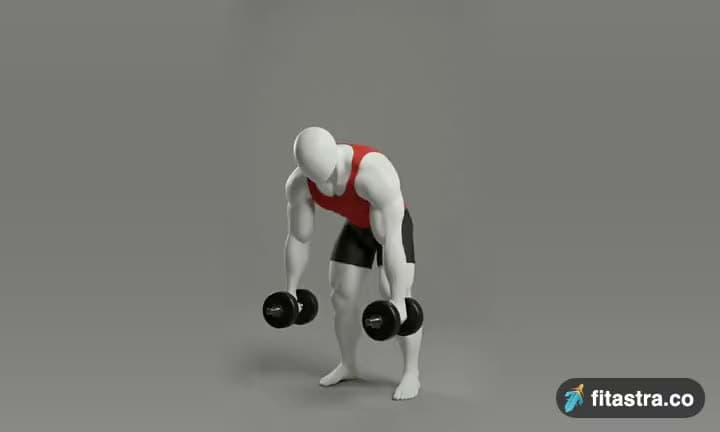 2
2Bent Over Two-Dumbbell Row
3 × 10–12Rest 60sPull to the belly, squeeze the shoulder blades, keep the torso still.
How to do it
With a dumbbell in each hand (palms facing your torso), bend your knees slightly and bring your torso forward by bending at the waist; as you bend make sure to keep your back straight until it is almost parallel to the floor. Tip: Make sure that you keep the head up. The weights should hang directly in front of you as your arms hang perpendicular to the floor and your torso. This is your starting position. While keeping the torso stationary, lift the dumbbells to your side (as you breathe out), keeping the elbows close to the body (do not exert any force with the forearm other than holding the weights). On the top contracted position, squeeze the back muscles and hold for a second. Slowly lower the weight again to the starting position as you inhale. Repeat for the recommended amount of repetitions.
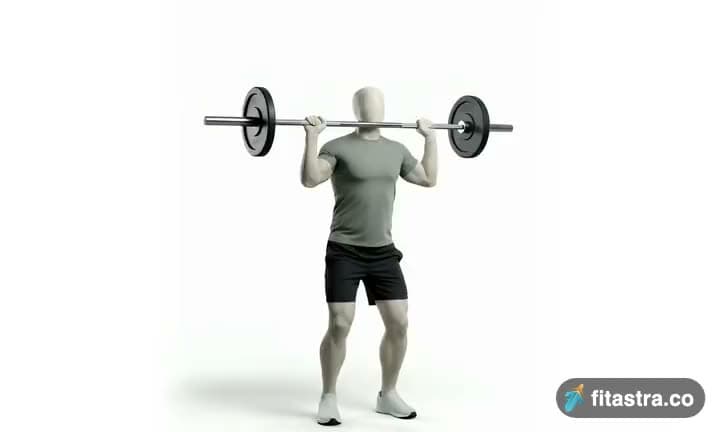 3
3Standing Military Press
3 × 12–15Rest 45sSqueeze your glutes and brace, so you press overhead instead of leaning back.
How to do it
Start by placing a barbell that is about chest high on a squat rack. Once you have selected the weights, grab the barbell using a pronated (palms facing forward) grip. Make sure to grip the bar wider than shoulder width apart from each other. Slightly bend the knees and place the barbell on your collar bone. Lift the barbell up keeping it lying on your chest. Take a step back and position your feet shoulder width apart from each other. Once you pick up the barbell with the correct grip length, lift the bar up over your head by locking your arms. Hold at about shoulder level and slightly in front of your head. This is your starting position. Lower the bar down to the collarbone slowly as you inhale. Lift the bar back up to the starting position as you exhale. Repeat for the recommended amount of repetitions.
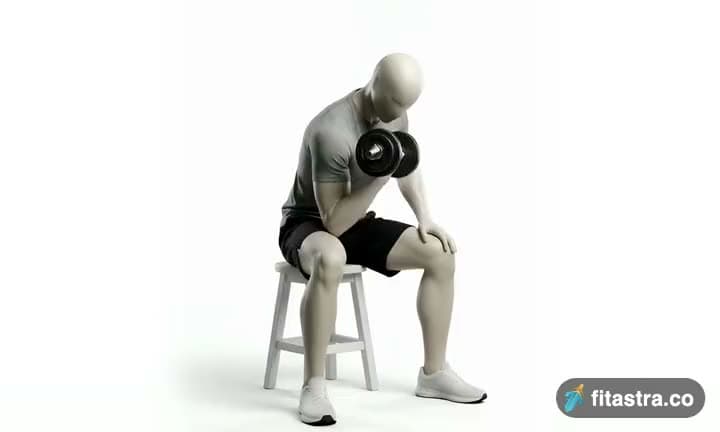 4
4Concentration Curls
3 × 12–15Rest 45sElbows pinned at your sides. Lower it slower than you lift it.
How to do it
Sit down on a flat bench with one dumbbell in front of you between your legs. Your legs should be spread with your knees bent and feet on the floor. Use your right arm to pick the dumbbell up. Place the back of your right upper arm on the top of your inner right thigh. Rotate the palm of your hand until it is facing forward away from your thigh. Tip: Your arm should be extended and the dumbbell should be above the floor. This will be your starting position. While holding the upper arm stationary, curl the weights forward while contracting the biceps as you breathe out. Only the forearms should move. Continue the movement until your biceps are fully contracted and the dumbbells are at shoulder level. Tip: At the top of the movement make sure that the little finger of your arm is higher than your thumb. This guarantees a good contraction. Hold the contracted position for a second as you squeeze the biceps. Slowly begin to bring the dumbbells back to starting position as your breathe in. Caution: Avoid swinging motions at any time. Repeat for the recommended amount of repetitions. Then repeat the movement with the left arm.
Day 2 · Lower Body
4 exercisesWarm-up first
- Easy cardio. 5-8 minutes. A brisk walk on the treadmill, an easy bike, or skipping — long enough to break a light sweat and loosen up. You're warming up, not training yet.
- Ramp up: Barbell Squat. Two light sets of Barbell Squat — roughly half your working weight, same reps. These don't count as your sets.
 1
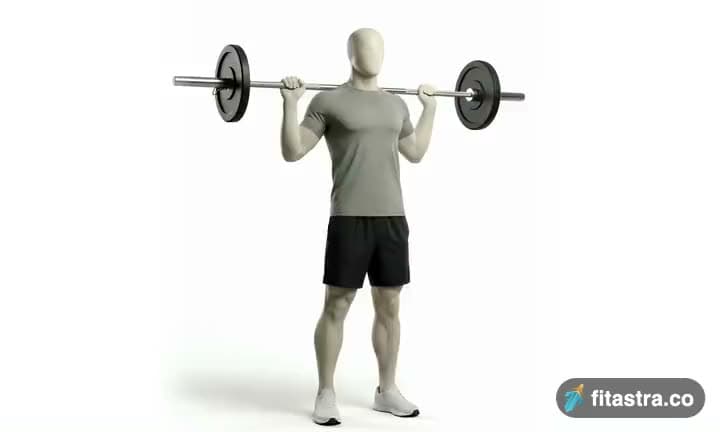
1Barbell Squat
3 × 10–12Rest 60sBrace hard, break at the hips and knees together, knees tracking over the toes.
How to do it
This exercise is best performed inside a squat rack for safety purposes. To begin, first set the bar on a rack to just below shoulder level. Once the correct height is chosen and the bar is loaded, step under the bar and place the back of your shoulders (slightly below the neck) across it. Hold on to the bar using both arms at each side and lift it off the rack by first pushing with your legs and at the same time straightening your torso. Step away from the rack and position your legs using a shoulder width medium stance with the toes slightly pointed out. Keep your head up at all times and also maintain a straight back. This will be your starting position. (Note: For the purposes of this discussion we will use the medium stance described above which targets overall development; however you can choose any of the three stances discussed in the foot stances section). Begin to slowly lower the bar by bending the knees and hips as you maintain a straight posture with the head up. Continue down until the angle between the upper leg and the calves becomes slightly less than 90-degrees. Inhale as you perform this portion of the movement. Tip: If you performed the exercise correctly, the front of the knees should make an imaginary straight line with the toes that is perpendicular to the front. If your knees are past that imaginary line (if they are past your toes) then you are placing undue stress on the knee and the exercise has been performed incorrectly. Begin to raise the bar as you exhale by pushing the floor with the heel of your foot as you straighten the legs again and go back to the starting position. Repeat for the recommended amount of repetitions.
 2
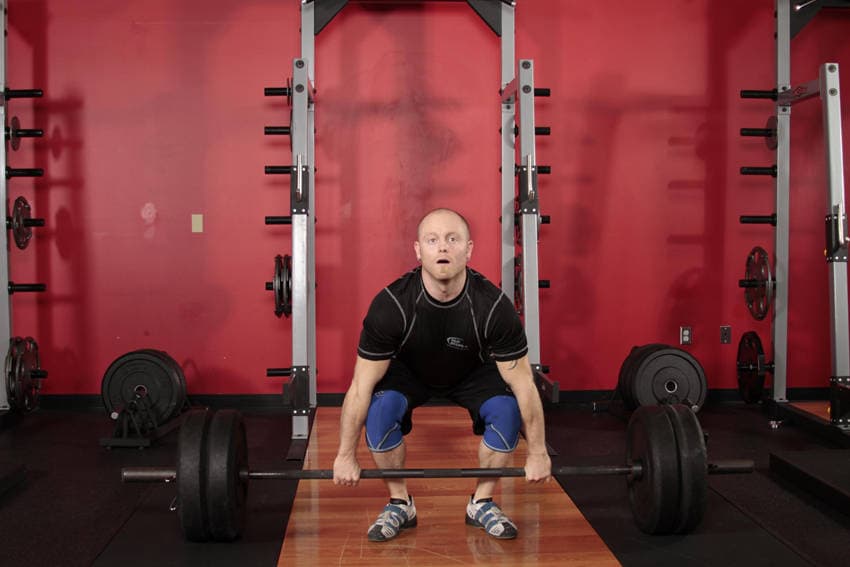
2Clean Deadlift
3 × 10–12Rest 60sHips back, back flat, bar close to the legs. Stand up by squeezing the glutes.
How to do it
Begin standing with a barbell close to your shins. Your feet should be directly under your hips with your feet turned out slightly. Grip the bar with a double overhand grip or hook grip, about shoulder width apart. Squat down to the bar. Your spine should be in full extension, with a back angle that places your shoulders in front of the bar and your back as vertical as possible. Begin by driving through the floor through the front of your heels. As the bar travels upward, maintain a constant back angle. Flare your knees out to the side to help keep them out of the bar's path. After the bar crosses the knees, complete the lift by driving the hips into the bar until your hips and knees are extended.
 3
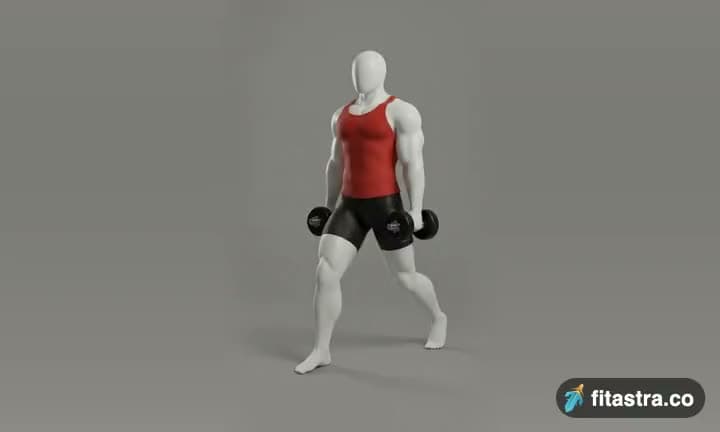
3Dumbbell Lunges
3 × 12–15Rest 45sFront shin vertical, torso tall, drive through the front heel.
How to do it
Stand with your torso upright holding two dumbbells in your hands by your sides. This will be your starting position. Step forward with your right leg around 2 feet or so from the foot being left stationary behind and lower your upper body down, while keeping the torso upright and maintaining balance. Inhale as you go down. Note: As in the other exercises, do not allow your knee to go forward beyond your toes as you come down, as this will put undue stress on the knee joint. Make sure that you keep your front shin perpendicular to the ground. Using mainly the heel of your foot, push up and go back to the starting position as you exhale. Repeat the movement for the recommended amount of repetitions and then perform with the left leg.
 4
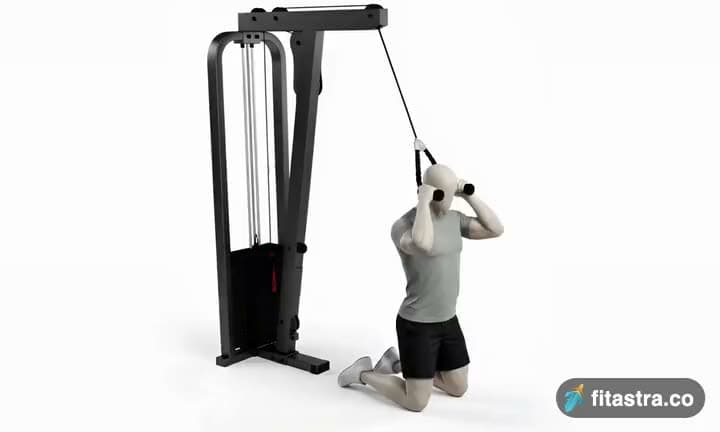
4Cable Crunch
3 × 12–15Rest 45sCurl the ribs toward the hips. Don't pull on your neck.
How to do it
Kneel below a high pulley that contains a rope attachment. Grasp cable rope attachment and lower the rope until your hands are placed next to your face. Flex your hips slightly and allow the weight to hyperextend the lower back. This will be your starting position. With the hips stationary, flex the waist as you contract the abs so that the elbows travel towards the middle of the thighs. Exhale as you perform this portion of the movement and hold the contraction for a second. Slowly return to the starting position as you inhale. Tip: Make sure that you keep constant tension on the abs throughout the movement. Also, do not choose a weight so heavy that the lower back handles the brunt of the work. Repeat for the recommended amount of repetitions.
Day 4 · Upper Body
4 exercisesWarm-up first
- Easy cardio. 5-8 minutes. A brisk walk on the treadmill, an easy bike, or skipping — long enough to break a light sweat and loosen up. You're warming up, not training yet.
- Ramp up: Incline Dumbbell Press. Two light sets of Incline Dumbbell Press — roughly half your working weight, same reps. These don't count as your sets.
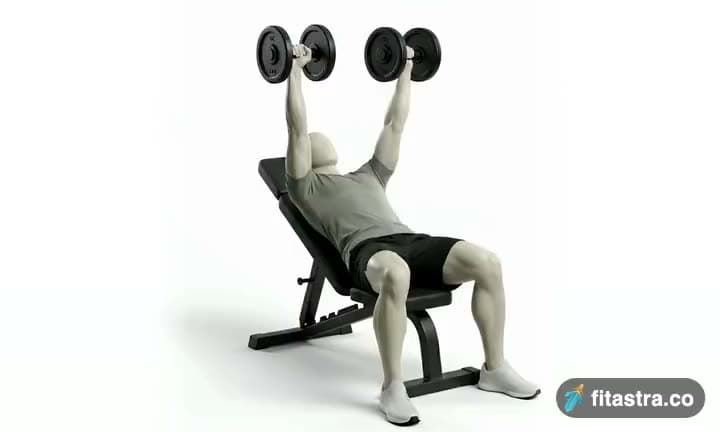 1
1Incline Dumbbell Press
3 × 10–12Rest 60sTouch the upper chest and keep your shoulder blades pinned back into the bench.
How to do it
Lie back on an incline bench with a dumbbell in each hand atop your thighs. The palms of your hands will be facing each other. Then, using your thighs to help push the dumbbells up, lift the dumbbells one at a time so that you can hold them at shoulder width. Once you have the dumbbells raised to shoulder width, rotate your wrists forward so that the palms of your hands are facing away from you. This will be your starting position. Be sure to keep full control of the dumbbells at all times. Then breathe out and push the dumbbells up with your chest. Lock your arms at the top, hold for a second, and then start slowly lowering the weight. Tip Ideally, lowering the weights should take about twice as long as raising them. Repeat the movement for the prescribed amount of repetitions. When you are done, place the dumbbells back on your thighs and then on the floor. This is the safest manner to release the dumbbells.
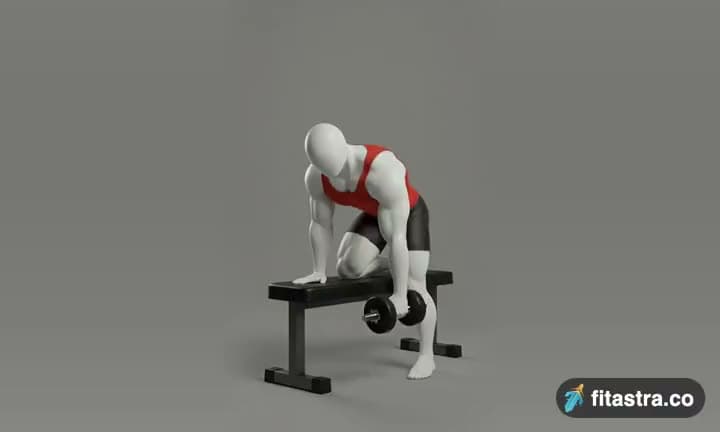 2
2One-Arm Dumbbell Row
3 × 10–12Rest 60sPull to the belly, squeeze the shoulder blades, keep the torso still.
How to do it
Choose a flat bench and place a dumbbell on each side of it. Place the right leg on top of the end of the bench, bend your torso forward from the waist until your upper body is parallel to the floor, and place your right hand on the other end of the bench for support. Use the left hand to pick up the dumbbell on the floor and hold the weight while keeping your lower back straight. The palm of the hand should be facing your torso. This will be your starting position. Pull the resistance straight up to the side of your chest, keeping your upper arm close to your side and keeping the torso stationary. Breathe out as you perform this step. Tip: Concentrate on squeezing the back muscles once you reach the full contracted position. Also, make sure that the force is performed with the back muscles and not the arms. Finally, the upper torso should remain stationary and only the arms should move. The forearms should do no other work except for holding the dumbbell; therefore do not try to pull the dumbbell up using the forearms. Lower the resistance straight down to the starting position. Breathe in as you perform this step. Repeat the movement for the specified amount of repetitions. Switch sides and repeat again with the other arm.
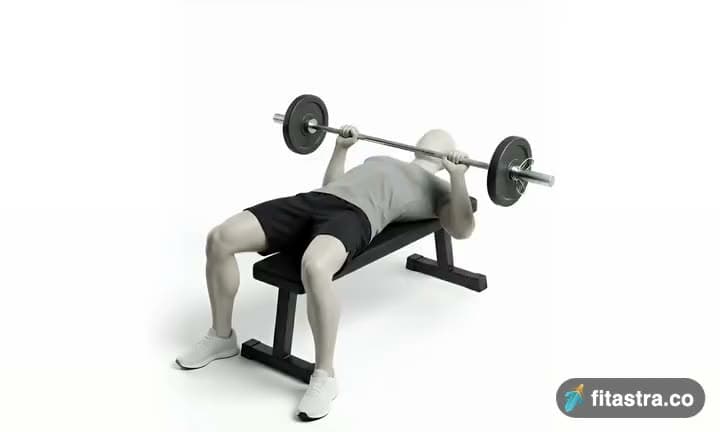 3
3Close-Grip Barbell Bench Press
3 × 12–15Rest 45sElbows tucked to about 45 degrees, touch the chest, then drive the floor away.
How to do it
Lie back on a flat bench. Using a close grip (around shoulder width), lift the bar from the rack and hold it straight over you with your arms locked. This will be your starting position. As you breathe in, come down slowly until you feel the bar on your middle chest. Tip: Make sure that - as opposed to a regular bench press - you keep the elbows close to the torso at all times in order to maximize triceps involvement. After a second pause, bring the bar back to the starting position as you breathe out and push the bar using your triceps muscles. Lock your arms in the contracted position, hold for a second and then start coming down slowly again. Tip: It should take at least twice as long to go down than to come up. Repeat the movement for the prescribed amount of repetitions. When you are done, place the bar back in the rack.
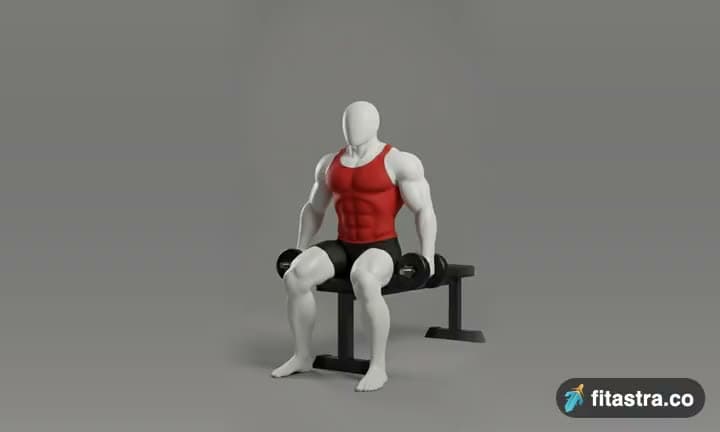 4
4Seated Side Lateral Raise
3 × 12–15Rest 45sLighter than you think. Lead with the elbows to shoulder height, no swing.
How to do it
Pick a couple of dumbbells and sit at the end of a flat bench with your feet firmly on the floor. Hold the dumbbells with your palms facing in and your arms straight down at your sides at arms' length. This will be your starting position. While maintaining the torso stationary (no swinging), lift the dumbbells to your side with a slight bend on the elbow and the hands slightly tilted forward as if pouring water in a glass. Continue to go up until you arms are parallel to the floor. Exhale as you execute this movement and pause for a second at the top. Lower the dumbbells back down slowly to the starting position as you inhale. Repeat for the recommended amount of repetitions.
Day 5 · Lower Body
4 exercisesWarm-up first
- Easy cardio. 5-8 minutes. A brisk walk on the treadmill, an easy bike, or skipping — long enough to break a light sweat and loosen up. You're warming up, not training yet.
- Ramp up: Cable Deadlifts. Two light sets of Cable Deadlifts — roughly half your working weight, same reps. These don't count as your sets.
 1
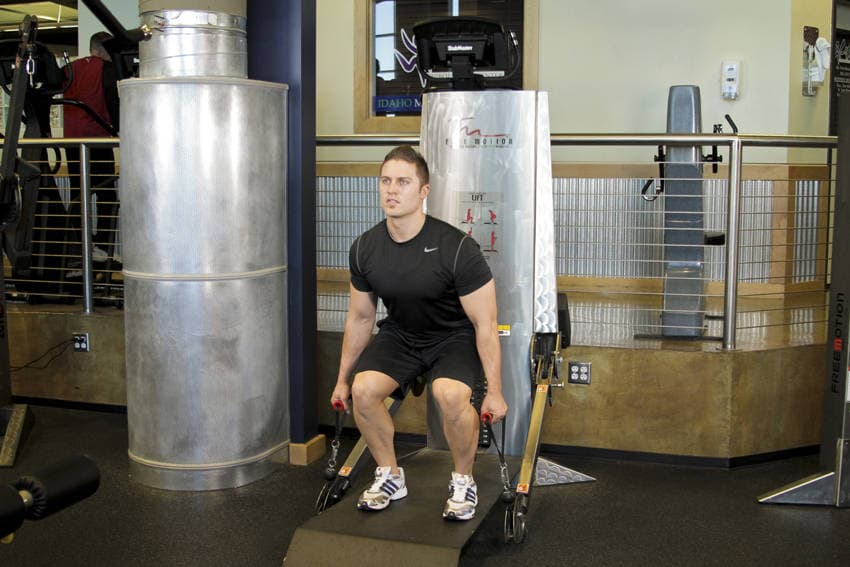
1Cable Deadlifts
3 × 10–12Rest 60sHips back, back flat, bar close to the legs. Stand up by squeezing the glutes.
How to do it
Move the cables to the bottom of the towers and select an appropriate weight. Stand directly in between the uprights. To begin, squat down be flexing your hips and knees until you can reach the handles. After grasping them, begin your ascent. Driving through your heels extend your hips and knees keeping your hands hanging at your side. Keep your head and chest up throughout the movement. After reaching a full standing position, Return to the starting position and repeat.
 2
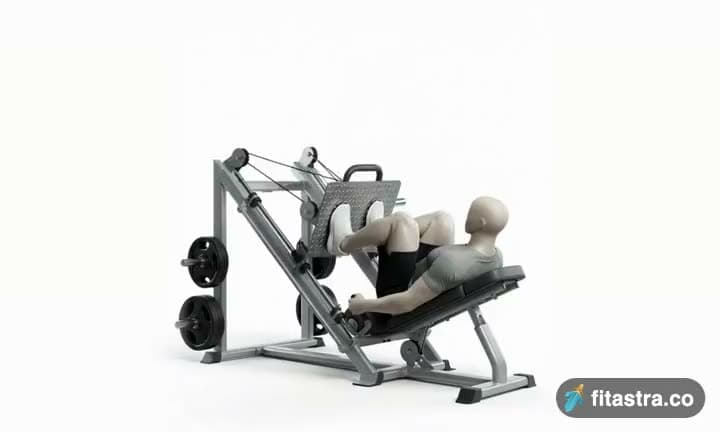
2Leg Press
3 × 10–12Rest 60sBrace hard, break at the hips and knees together, knees tracking over the toes.
How to do it
Using a leg press machine, sit down on the machine and place your legs on the platform directly in front of you at a medium (shoulder width) foot stance. (Note: For the purposes of this discussion we will use the medium stance described above which targets overall development; however you can choose any of the three stances described in the foot positioning section). Lower the safety bars holding the weighted platform in place and press the platform all the way up until your legs are fully extended in front of you. Tip: Make sure that you do not lock your knees. Your torso and the legs should make a perfect 90-degree angle. This will be your starting position. As you inhale, slowly lower the platform until your upper and lower legs make a 90-degree angle. Pushing mainly with the heels of your feet and using the quadriceps go back to the starting position as you exhale. Repeat for the recommended amount of repetitions and ensure to lock the safety pins properly once you are done. You do not want that platform falling on you fully loaded.
 3
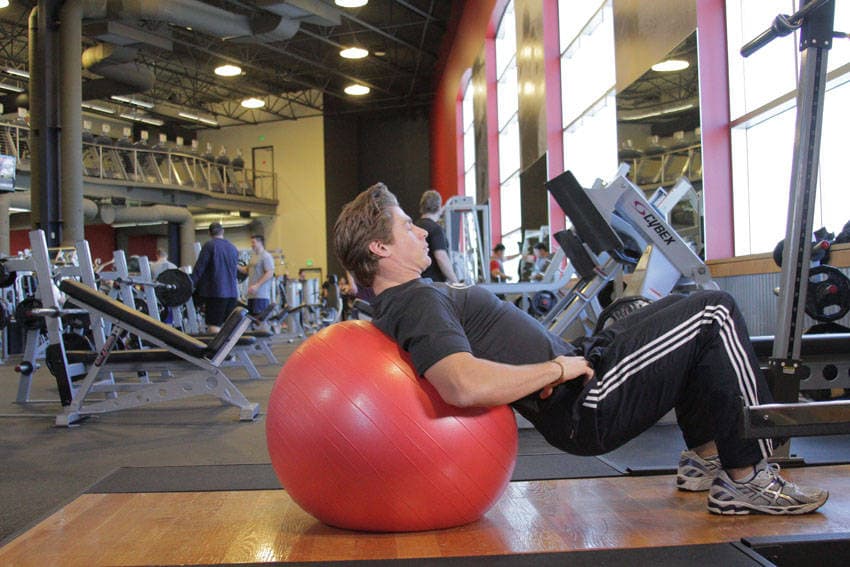
3Physioball Hip Bridge
3 × 12–15Rest 45sRibs down, chin tucked, and hold the squeeze at the top for a full second.
How to do it
Lay on a ball so that your upper back is on the ball with your hips unsupported. Both feet should be flat on the floor, hip width apart or wider. This will be your starting position. Begin by extending the hips using your glutes and hamstrings, raising your hips upward as you bridge. Pause at the top of the motion and return to the starting position.
 4
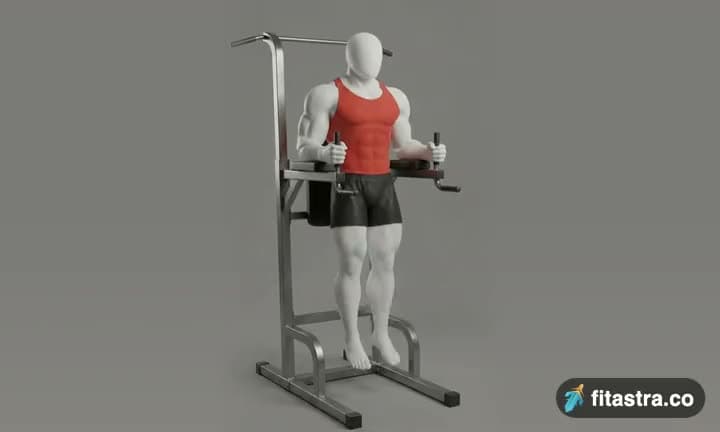
4Knee/Hip Raise On Parallel Bars
3 × 12–15Rest 45sCurl the ribs toward the hips. Don't pull on your neck.
How to do it
Position your body on the vertical leg raise bench so that your forearms are resting on the pads next to the torso and holding on to the handles. Your arms will be bent at a 90 degree angle. The torso should be straight with the lower back pressed against the pad of the machine and the legs extended pointing towards the floor. This will be your starting position. Now as you breathe out, lift your legs up as you keep them extended. Continue this movement until your legs are roughly parallel to the floor and then hold the contraction for a second. Tip: Do not use any momentum or swinging as you perform this exercise. Slowly go back to the starting position as you breathe in. Repeat for the recommended amount of repetitions.
Astro
In the app I build this from everything you tell me — injuries, moves you hate, your deadline — then check in every morning with an insight from your own training. Free.

How the 4 weeks progress
- Week 1 · Foundation. Learn the movements, leave reps in the tank. Form is the flex.
- Weeks 2–3 · Build. Add a set — same form, more work. This is where it happens.
- Week 4 · Deload. One set less, lighter on purpose. Recovery is training too.

Keep going with Astro — the FitAstra app is free
- • Built from all your answers (Free)
- • A morning insight and a recap after every workout (Free)
- • Your plan adapts when your week does (Pro)
Scan, or open fitastra.co/download
Want a meal plan too?
Astro gives you the nutrition rule above, not a meal chart. A verified FitAstra coach does: after a 1-on-1 video call, your coach builds your week of workouts and nutrition. Sessions from ₹299.
Find a coachWeek one is the start.
What Astro does in the app, after this page.
- Free
Built from all your answers
The app asks about injuries, exercises you dislike and your deadline before Astro builds your plan.
- Free
A morning insight and a recap after every workout
Drawn from your own training history — if your data does not show it, Astro does not claim it.
- Pro
Your plan adapts when your week does
Miss a week and Astro rebuilds it around the reason, scales a hard week down, or regenerates a day.

Your fitness community
is waiting.
Find partners, book coaches, and train with Astro — free to start, right from your phone. Partners and events stay free; Astro's chat and plan changes are FitAstra Pro.


Free to download · No credit card required